Showing posts with label Butterfly valve manufacturer. Show all posts

Wednesday, 8 June 2022

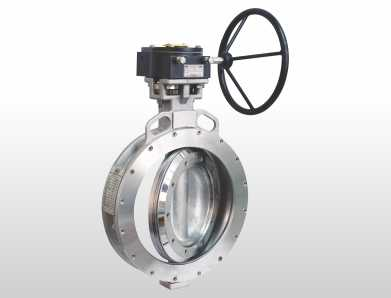
Triple Offset Butterfly Valve

Triple offset butterfly valves are otherwise called triple whimsical butterfly valves, these valves have kept on progressing since they are presented close to 50 years back, and these valves are currently utilized across numerous ventures. At first, Triple offset butterfly valves are utilized for water shut-off purposes yet the upgrade in plan throughout recent years made this valve to be utilized in basic cycles too.


Today, Triple offset butterfly valve offers an assortment of benefits to the business, and most as of late, have earned respect due to their capacity to control contamination. To handle this worldwide test of outflows, the business began to search for additional imaginative ways and triple erratic butterfly valve as of late viewed by valve producers for this issue. By presenting new and refreshed highlights, Triple offset butterfly valves are utilized in manners that have never been utilized, even though they are as yet utilized more expense successfully.


What is Triple Offset Butterfly Valve?


There are three distinct offsets in the Triple offset butterfly valve (TOV). Two offsets are in the middle and the third offset is on the fixing surface making a cone-like state of the circle and the seat. Triple offset valves are utilized where an air pocket tight seal is required, the framework is under high temperature and hard fixing with zero spillage is required.


First, offset is given to the focal pivot of the fixing surface in which the circle turns 360-degree around the center hub to give fixing by misshaping the delicate seal which brings about full contact.


The second offset alludes to the place of the shaft concerning the centerline of the drag. At the hour of activity, it delivers a cam activity to lift the seat away from the seal, bringing about grating during the initial 10 levels of opening and the last 10 levels of conclusion.


The third offset is the calculation of the end components. Each fixing component is machined into a tapered offset profile, which brings about a right-calculated cone. All through its functioning cycle, this ensures contact-free stroking. Contact is just made with the 90° point working as a mechanical stop at the last place of conclusion; this outcome in no over-travel of the plate seat.


At the point when these three offsets are given together, the valve offers a nonstop fixing surface, shows insignificant wear between fixing surfaces, and gives solid fixing all through the valve's life. What's more, staying and restricting of the plate is brought down and less working force is expected as it has an advanced seating point.


Characterization by Connection Type


Given the association, there are various sorts of Triple offset butterfly valves.


  • Wafer type closes.

  • Drag type closes.

  • Both flanged closes.

  • Butt-welded types end.


Wafer Type: The wafer type triple offset butterfly valves were worked to keep a tight fixing, safeguarding against bi-directional strain differentials, to forestall any discharge in gadgets that were worked for uni-directional stream. This is finished by the utilization of a firmly fitted cap, for example, an O-ring, gasket, definitively machined, alongside a smooth valve face on the downstream and upstream pieces of the valve.


Lug Type: The haul type triple offset butterfly valve arrangement is like the 3-piece ball valve in which one finish of the pipeline can be supplanted without affecting the opposite side of the valve. This can be accomplished with strung additions, spines, and two arrangements of hauls (screws) that don't utilize nuts so every rib has its fasteners. It is additionally vital to recollect that you don't have to close down the entire gadget to assess, clean, fix, or supplant the drag butterfly valve.


Flanged End Type: The flanged type unpredictable butterfly valve has a rib at the two closures of the valve to be connected with pipe spines. This sort of end association is utilized for the extremely enormous size of a butterfly valve.


Welded End Type: The welded end type butterfly valve is utilized where the framework is feeling the squeeze. These sorts are by and large utilized for little size butterfly valves.

How Does Triple Offset Butterfly Valve Work?


The triple offset butterfly valve doesn't work like a customary butterfly valve, which while turning the switch, goes sideways to permit the media to pass, such as handwaving. The triple offset type works like a globe valve, where the plate moves a piece like a cone, going all over.


A solid seal happens as the cone moves to turn into a circle. There is no drag when the seat comes into contact with the circle because of the calculated situating of the plate comparable to the surface.


Application and Benefit of Triple Offset Butterfly Valve


Triple Offset Butterfly Valves are significant for applications where bubble-tight fixing is required. In certain applications, bubble-tight fixing can't be achieved by utilizing twofold offset butterfly valves.


A few cycles don't adjust well to traditional butterfly valves, for example, applications containing cruel synthetics or mediums with little particles powerless to stop up valves and lines. In such frameworks, Triple Offset Technology gives predominant benefits where cam activity and right-calculated funnel-shaped fixing guarantee that the metal seal components won't ever come in touch until its last level of shutting.


Here metal to metal fixing gives bubble-tight shutoff which brings about no spillage execution.


Rubbing-free stroking is accessible all through the cycle which permits the activity with low force and broadens the valve life.


Valve has no cavities between the fixing components because of which stopping up is dispensed with which brings about low support and thus broadens the valve life.

Thursday, 24 June 2021

Attributes and system demands of Butterfly Valve

Listed below square measure some overall management valve terms and characteristics for butterfly valves once used for modulating service. A valve with the aforesaid underlying feature might provide a unique put-in characteristic thanks to interaction with the system.

Linear. The rate is proportional to the whole quantity of disk travel. By manner of instance, in five hundredth open, the flowrate is five-hundredths disc style of most circulation.

Equal share. Equal share feature means equal increments of valve travel produce equivalent p.c changes in flowrate as associated with this flowrate that existed within the former traveling position.

For instance, if a valve traveling shift from two-hundredth hospitable half-hour offered created the seventieth modification in flowrate, then a valve travel modification from half-hour offered to four-hundredth would turn out a second seventy p.c shift in flowrate. If the flowrate in two-hundredth open was one hundred GPM, afterward flowrate at half-hour offered are a hundred and seventy GPM and also the flowrate in four-hundredth open are seventieth beyond at half-hour travel or 289 GPM. the precise same would be true for every extra progressive travel position.

Quick gap. A quick-opening valve means that. The flow rate through the valve will increase quite speedily for progressive changes in valve travel once the valve place is close to closed. As valve position becomes a lot spacious, flowrate modifications diminish with progressive changes in valve traveling coming back to zero change because the valve position nears full open.

Traditionally, the numerous butterfly valves have shown equal share inherent characteristics at angles of the gap from twenty Levels to seventy Degrees. Advances in disk style have enabled the extension of the equal share characteristic through to the ninety Degrees, full-open place.

Designs used for the growth of the equal share characteristic possess varied from special contouring with projected flow disturbance to thin sorts with virtually no leak disturbance. the previous triggers flow restriction at intermediate traveling options.

Their square measure alternative sorts of valve disks offered that show underlying flow attributes approaching linear. This deviation from the quality characteristic is that the result of rather significant disc cross-sections. As these valves square measure utilized in management programs, the user should certify the suitableness of the linear attribute.

Still another style of disk exhibits a feature midway between linear and equal share. Usually, this may be a disc style for superior support however with the lowest offered capability.

The selection of the right management valve feature is set by the wants of this machine. As there square measure varied variables to require into consideration, whole-system analysis is needed to work out exactly what is the best characteristic. Often, it is not sensible to perform a system analysis; therefore, sure rules of thumb square measure all offered:

If unsure regarding the well-liked characteristic, choose equal p.c. Such a selection would possibly cause a perfect match. If the match isn't ideal, it'll not be as harmful because the selection of a linear feature once it is not an ideal match.

Except for pressure-relief applications, the quick-opening feature is occasionally used for management applications.

Other rules of thumb for the choice of characteristic for liquid package are: If bigger than twenty-five p.c of system pressure drop is found to the valve at most flow conditions, the usage of the linear attribute provides the most effective results. If but twenty-five p.c of system stress drop is offered into the valve at most flow necessities, the usage of the equal share feature provides the easiest results. In the event the system is in control of pressure, the employment of AN equal share feature is favored. Rules of thumb for the selection of characteristic for gas applications include: To get small-volume strategies, the employment of the equal share characteristic is most well-liked. For large-volume strategies, the employment of the terminal attribute is most well-liked if quite twenty-five p.c of the system pressure drop is offered to the valve. In the span of choosing the specified management valve attribute, do not be misled into choosing a linear one on the idea that it'll provide AN overall linear system. When it can be desired to possess a linear system, the terminal valve attribute might not provide technique one-dimensionality. this is often thanks to a distinction between the valve characteristic and conjointly the put-in characteristic. The inherent characteristics square measure what the valves give below constant pressure drops that square measure typically found in take a look at situations. put in characteristics occur once the valve is ready up in an exceeding system during which pressure drops vary with changes in valve position.

Economy and Reliableness Butterfly valves cannot perform in each application. Factors determined by the support, temperature, and pressure conjointly decide the valve kind to pick. The service necessities should initially be set to properly apply just about any valve. Technological innovations combined with its easy style have created the butterfly flap a reliable, flexible, and economical resolution to varied industrial flow management necessities. For Butterfly Valve Visit Now.


Monday, 20 July 2020

Guide to Butterfly Valves for Fire Protection

A butterfly valve isolates or modulates the circulation of fluid through piping systems. While they may be used with liquids, gases, and also semi-solids, butterfly valves such as fire coverage function as control valves which turn on or shut off the flow of water to the pipes serving fire sprinkler or standpipe systems.

In the following guide, we describe how they operate, what components constitute a butterfly flap, and the different kinds that are available.


How does a butterfly valve function?
After the disk is turned parallel to the flow, water may move through freely. Rotate the disc 90 degrees, and also the motion of water to system piping quits. This lean disc can stay in the water's course at all times without appreciably slowing the motion of water through the valve.

The disk's rotation is controlled by means of a handwheel. The handwheel moves a rod or stem, which turns the disk and simultaneously rotates a position indicator -- typically a brightly-colored bit sticking out of the valve -- which reveals the operator which way the disk is confronting. This index allows for at-a-glance confirmation of whether the valve is closed or opened.

The position index plays an important part in keeping fire security systems operational. Butterfly valves serve as control valves capable of shutting off the stream of water into entire regions of fire sprinkler or standpipe systems. Entire buildings can be left defenseless when a control valve is left closed. The position indicator helps fire professionals and centre managers find a closed valve and re-open it quickly.

There are many butterfly valve manufacturers available in the market but the best butterfly valve manufacturer makes such as fire protection also include electronic tamper switches that communicate using a management panel and alarms once the valve's disk rotates. Frequently, they include two tamper buttons: one for connection to a flame control panel and another for linking to an auxiliary device, such as a horn or bell.


What components should I look for in a duplex valve for fire protection?

Butterfly valves are composed of just four main elements:
  • A human body, which houses the disk, stem, and seat
  • A disc controlling flow of fluid through the valve
  • A stem used to rotate the disc and position index
  • A seat, which creates a water-tight seal with the disc when the valve shut
  • Their simple design makes them even a cheap option in comparison to other valves.

The components to take into account when choosing a butterfly valve is contingent on the needs of the installer and also the sort of arc used. Although they are created out of many different valve seats, their seats are nearly solely EPDM rubber-lined in fire protection. EPDM is preferred for its resistance to climate, low and high temperatures, various substances, as well as leakage.

What is a wafer butterfly valve?
The wafer butterfly valve is designed for use with flanged piping systems and stored in place with two flanges along with a series of bolts and nuts. A wafer valve needs to have the flanges on both sides of it connected to each other to hold the valve in place. Consequently, the whole fire sprinkler or standpipe system has to be shut down and drained before installing or removing these valves.

What is a grooved butterfly valve?
With the valve closed, the coupling downstream from the supply of water could be removed while the coupling remains attached, shutting off the supply of water.
These valves are the modern replacement for lug-type butterfly valves, which utilize threaded inserts, or "lugs," which empower installation by boats alone.

What's a threaded butterfly flap?
A threaded duplex enclosure is constructed of the identical internal components as wafer or grooved butterfly valves, but equally, links are threaded (i.e. it sticks onto the pipe). Threaded butterfly valves demand precision and precision during the setup procedure because the endings must be threaded on each side. They can be found in many dimensions, but 1-inch into 1 1/2-inch would be definitely the most frequent.

Compared with other valve types, butterfly valves are comparatively lightweight, particularly at larger sizes. Because they embody an easy and inexpensive layout they have fewer parts, which makes them simpler to repair and maintain. Additionally, their simple design lessens the time necessary to put in one, decreasing labor costs.

In fire protection, they're available for tubes as little as 1 inch and as high as 12 inches in diameter. Several have pressure ratings as large as 300 PSI.

Do butterfly valves require regular maintenance?
To comply with standards set by the National Fire Protection Association (NFPA), butterfly valves need weekly inspections. However, if the valve is electrically supervised, it might be scrutinized. When there are several specified maintenance conditions, the instructions do specify they must be tested yearly.

When scrutinizing a butterfly valve, then confirm that the valve is:
  • From the normal place (open during normal system operation or closed during testing or maintenance)
  • Sealed, locked, or supervised
  • Accessible
  • Free of escapes